

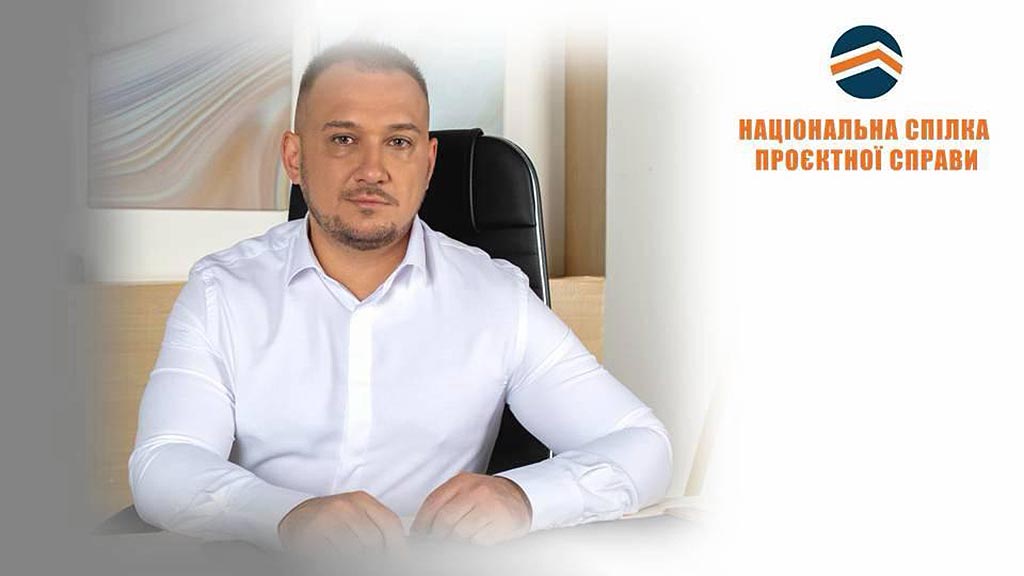
Transformation is not rebranding, but changing the rules of the game and approaches
Interview about the need to transform the National Expert Construction Alliance of Ukraine (NEBAU) and the philosophy of the National Union of Project Affairs (NUPA) with scientist, Doctor of Law, President of the NUPA Viktor Leshchynsky.
– Viktor Petrovych, many have already called the general meeting of the ex-NEBAU in November 2025 the starting point of a new industry reality. Why was there a need to transform NEBAU into the National Union of Project Affairs (NUPA)?
– First of all, because the Alliance has grown from a professional club format. Over the past few years, we have gone from an association of experts to an institution capable of influencing rules, standards, and approaches to the topic of reconstruction. The new name of NEBAU – NSPS – is not some kind of “cosmetics”, but the fixation of a new important role: design as a strategic function of Ukraine’s development, and not a certain auxiliary stage of construction.
– If we look at the evolution of NEBAU since 2021, what has become the key driver of change?
– Reality.
2021 was a year of community formation and the first significant international contacts for us. The following year forced us to work in war conditions. We developed damage assessment methodologies, solutions for temporary housing, etc. In 2023, it became obvious that without transparency and anti-corruption mechanisms, reconstruction would be doomed. 2024 became a year of updating norms, a registry of shelters, and systematic work with investors.
I will say frankly that every year only added to our responsibility. And the transformation of NEBAU into NSPS became a completely logical consequence of growth and development.
– You often say in various interviews on many TV channels that transformation is not a reaction, but rather a certain anticipation of events. What exactly do you put into this concept?
– We don’t want to just react to problems that arise. We want to create an environment where there will be fewer problems. This requires clear standards, professional ethics, modern technologies, and a strong institution that will be able to keep all of this in a single system, in a single philosophy.
That is why the NSPS has identified six key areas of work: from legislative initiatives and digitalization to professional education and international communication. This is definitely not a set of beautiful slogans, but a real architecture of industry changes.
– Digitalization, BIM, AI, 3D… For many, this sounds like a distant future. How realistic is this for Ukrainian design today?
– This is not the future. This is the present and a key condition for competitiveness. If we want Ukrainian projects to be understandable to international partners and investors, we must speak the same language with them. And this is the language of modern technologies. However, technologies without professional standards and education do not work. That is why we consider digitalization only in combination with personnel training and certification.
– Participants of the ex-NEBAU meeting in November unanimously supported the continuation of your powers as the President of the new NSPS. Why is continuity important for the Union, in your personal opinion?
– Because transformation is a process, not a one-time decision. We are simultaneously changing the brand (NEBAU to NSPS), the charter, membership rules, and approaches to self-regulation. During this period, it is important not to lose the logic of change and trust within the community. This is not a question of personalities, it is a question of the stability of reform.
– You often emphasize the exceptional role of Ukrainian designers in the reconstruction of Ukraine. What do they lack most today?
– Definitely not talent or knowledge. There is a lack of institutional support and fair “rules of the game”. Our specialists should receive decent pay for their work, decent legal protection and the opportunity to develop in Ukraine, and not seek fulfillment somewhere else. This is not only a matter of economics, but also a matter of preserving the professional potential of the state.
– You have actively studied the experience of other countries. What is the lesson for Ukraine?
– It is very simple: high-quality construction is impossible without a strong professional association. Poland, Germany, and the Baltic countries have understood this for a long time. There, it is the industry institutions that form standards, take an active part in self-regulation, and are partners of states. Partners, not extras.
– What do you see the National Union of Project Affairs as in a few years?
– A center of competences. A place where standards are formed, where learning takes place, where discussion takes place, where decisions are checked and responsibility for actions is taken. During the period of reconstruction of Ukraine, you must agree that this is what will distinguish chaos from systematicity.
And I am convinced that the transformation of the design industry will become one of the strong foundations for the transformation of our entire country.
