

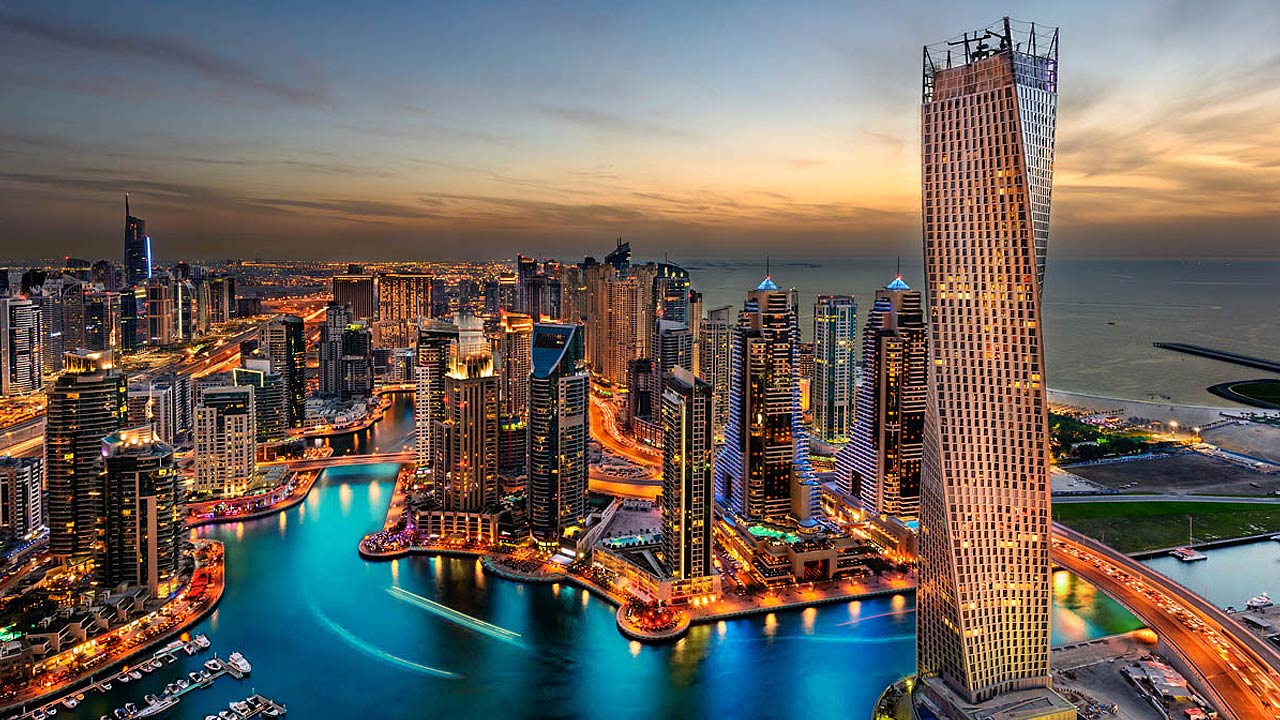
Unusual architectural solutions, green buildings or the world’s tallest skyscrapers – all this brings diversity to the appearance of cities and attracts tourists
Instead, Ukraine is currently only moving in the direction of unusual and interesting projects, and there are a number of explanations for this.
There are many interesting architectural projects underway in the world today. For example, the tallest building and the first structure to cross the 1 kilometer mark is the Jeddah Tower, which is being built near the second largest city in Saudi Arabia.
Its design height is 1,007 meters, and the number of floors is 167. For comparison, the tallest building today is the world-famous Burj Khalifa, which has 828 meters and 163 floors.
According to the authors of the Jeddah Tower project, the skyscraper will become the center of a new ultra-modern business agglomeration with a population of 80 thousand people.
The cost of construction is more than 1.2 billion dollars, and the construction period is 11 years. The project began in 2013 and is planned to be completed in 2024.
However, the entire new agglomeration, which is actually a small area of the city, will cost at least 20 billion dollars. For comparison, this is 1/6 of Ukraine’s GDP.
Another unusual project is the Agora Garden Tower in Taipei, Taiwan. Its main feature will not be its height – the future building will have only 20 floors.
Instead, each floor of the white building will have gardens, and the tower itself will spiral 90 degrees from bottom to top.
Of course, its energy consumption will be minimized, the basis of supply will be renewable resources, and the materials will be 100% recyclable.
In fact, the building is a new word in ecological design. In addition, future apartment owners will not suffer from the lack of parks – even on the tenth or fifteenth floor they will be able to walk through a real garden at any time.
The Dawang Mountain Resort complex in China is interesting from an architectural point of view. And not only because, unlike the usual mountain resorts, it is built not from wood, but from glass, metal and concrete.
The resort’s charm is the main building, located on two sheer cliffs. It will hang down, opening a panorama of a 30-meter waterfall for guests.
In the middle of the complex there will be everything – from a water park and shops, to an artificial snow slide for skiing.
In Malaysia, they decided not to limit themselves to one building, instead they are building a new city on 1,400 hectares of four artificial islands.
The location should become home to more than 700 thousand people, use rainwater for consumption and growing products, and renewable sources of electricity.
Also, most of the buildings will have parks instead of the usual roofs. And to make it easy for people to walk, they will all be connected together.
Also, right now in the world incredible airports, stadiums, underwater restaurants, hotels, buildings in abandoned quarries and other bizarre objects are being built, each of which is surprising and deserves attention.
In general, modern architectural projects can be divided into several groups. The first is a variety of buildings with the prefix “the most”.
They are built in order to show the economic strength and power of a particular city or country. They also act as “magnets” for tourists.
The second large group is the currently popular ecological projects. Houses with gardens and parks, green roofs, made of recycled or recyclable materials.
So far, they are quite expensive and strange, but it is on such projects that architects test bold concepts, and some of them may reach the mass segment in five to ten years.
Projects on artificial islands have also become popular. Many economically powerful regions and countries, such as Shanghai, Singapore, Japan and a number of others, simply do not have enough land to provide space for a constantly growing population.
Alluvial islands are also built near large cities, where the price of land is so high that it is cheaper to create your own than to buy an existing one.
With the growth of agglomerations and an increase in population, such projects will become relevant for an increasing number of localities.
Also, with each new architectural object, a better understanding of the features of artificial islands on rivers, in bays and other locations appears.
And if water began to stagnate near the famous palm trees in Dubai, this began to be taken into account in the future for any other projects.
As for Ukraine, the low popularity of interesting architectural projects in our country can be explained precisely by the absence of the three aforementioned factors.
The country does not have excess funds to build kilometer-long skyscrapers. While similar buildings with 20-25 floors will cost at least five to eight times cheaper.
At the same time, we have enough free space to accommodate all these objects on it.
Also, few people are ready to invest in environmental projects with unknown or completely absent periods of future profit and return on investment.
Buyers simply will not agree to overpay two prices for an apartment or office, just because it is made of recycled materials and uses solar energy.
Demand in the residential and commercial segments dictates to developers the need for simple and functional solutions without excesses. Regardless of the segment, people or companies will not overpay for inefficient areas.
Although, of course, there are exceptions here too. Among the examples of interesting projects, the first to come to mind are the Ocean Plaza shopping center in Kyiv, as well as several residential projects, also in the capital.
If you search for Ukrainian architecture on the Internet, all the articles will be about fortresses, estates of former nobles or magnates. The most “modern” projects are modernist buildings like the “plate”, the Salyut hotel, or the round “beginnings” of corn-shaped residential buildings in Obolon.
By the way, they reveal another reason for the low popularity of unusual architecture in modern Ukraine. Unfortunately, many progressive projects become obsolete very quickly.
In just a few decades, a building with a margin of physical strength for a century may not be morally relevant at all. These are also risks for property owners, who may lose the value of their assets, and therefore decide to follow a more standard and proven path.
Architecture is one of the mirrors of society, its development and values. Today, buyers in Ukraine are willing to pay for practicality, simplicity and functionality.
People and businesses are not chasing the prefixes “the most” and are not ready to neglect comfort or convenience. This means that for at least five to ten years our houses will not appear in global ratings of interesting architectural projects, except, perhaps, some private estates.
Today, Ukraine has a complete dictate of the customer and buyer over architects. Although some new projects may break this trend – at least, on the renders, it looks like this.
Dmytro Isayenko, People’s Deputy, Secretary of the Verkhovna Rada Committee on the Organization of State Power, Local Self-Government, Regional Development and Urban Planning.
