

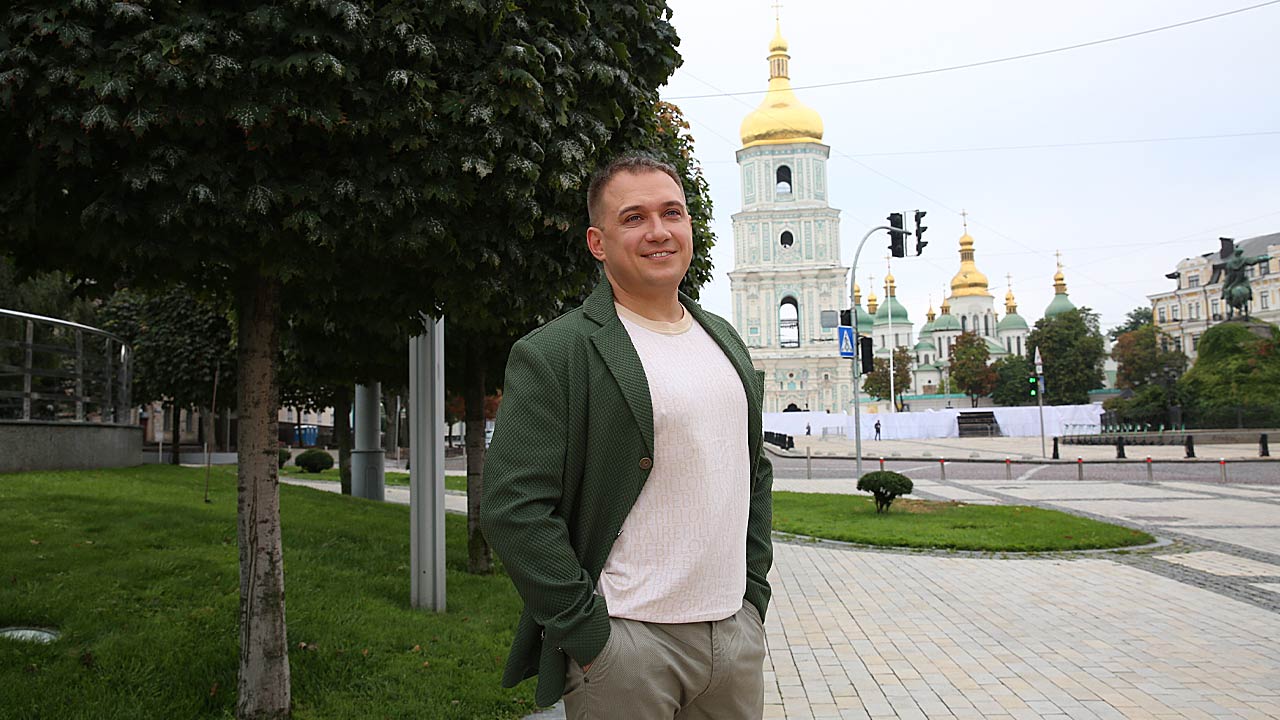
There is no sphere of life that would not be affected by the elections in one way or another. And what about the construction sector? We talk about this with the president of the National Expert Construction Alliance of Ukraine, Viktor Leshchynsky.
— Viktor Petrovich, in general, in our country, elections to local government bodies and the Verkhovna Rada of Ukraine affect all spheres of life. Do they affect the construction sector?
— Unfortunately, the construction sector has not been of interest to politicians for a long time. They mostly use populist slogans, such as “large-scale construction”, “the largest construction”, etc. In fact, as far as the public sector is concerned, this year a lot of money was withdrawn from state programs and directed to road repair work.
In most cases, no new construction is being carried out in our country at all. Roads are not being built, but at least major repairs have been started on roads of national importance. And with municipal funds that have come to the rescue as a result of decentralization, local roads are being repaired. I travel around the country a lot, and I can feel it.
As for the “large-scale construction” of social facilities in Ukraine, this program is not being implemented even by 50% due to the many blunders that have been made before. But I hope that the real reconstruction of the state will still begin next year.
— Many politicians have started talking about renovating old housing. Are these election promises or reality?
— Only politicians who have already been elected can renovate an outdated housing stock, and they understand that these are revolutionary forms of administration. First of all, it is necessary to implement pilot renovation projects in different regions of the country in order to “roll out” the entire mechanism on them. For example, how to deal with residents, with co-financing, etc. And only then apply the proven mechanism throughout the country.
Now all those who talk about renovation are only trying to “blow up” the Internet. Our ministry does not make appropriate decisions, because this is essentially a utopian situation. Many believe that renovation is a house that was moved out and built or pasted over with foam plastic. In fact, renovation is a very complex technical combination: with external walls, and with networks, floors and strengthening foundations…
That is, there are many complex issues that need to be resolved. And to drive people into a black hole who don’t understand why they want to be evicted from their homes and left on the streets, then, probably, there won’t be such a suicide politician.
— Many politicians build their election campaigns on slogans related to construction. In your opinion, what issues are being speculated on the most? Isn’t this the “Great Construction”?
— In fact, the current government is always speculating on this. For example, we have built so many roads – a lie, we have built a hundred schools – a lie. Or their reconstruction, which is also a lie. In general, the state is obliged to develop programs when forming the budget and return the same subventions to their places. And after the decentralization reform, municipalities should also work more actively in this direction. The funds collected from the taxes of Ukrainians should be invested in all areas of construction of social facilities.
— In your opinion, how does the decentralization reform affect the local situation with urban planning and architecture?
— Regarding this question, it is a national disaster in general. After this reform, we are returning to the times of Ukraine with Cossacks on horses in an open field. The united territorial communities will not have general plans.
They should agree with the district administrations, but they will also be reformed. After all, with the changes in these administrative units, the consolidation of districts, it is necessary to change the planning of the region: these are central roads, large main gas pipelines, etc.
And the general planning of the state is under threat, because we do not have a structure from top to bottom. And the issues that will be resolved locally will break the entire planning system. For example, in the ATC they will allocate a land plot for a shopping pavilion, and in the national plan there should be a road in this place. And this is nonsense. But it exists now.
— What about the reform of DABI?
— This reform is taking place gradually, but there are no major changes. Currently, two structures have been created that are not operational and are only preparing for some competitions and recruitment. DIM (State Inspectorate for Urban Planning) actually does not correspond to the name of this inspection. Because urban planning is the general planning of cities, and the inspection deals with real estate, construction, etc.
As for the service service that will issue permits and put objects into operation, it should be a kind of ASC that will accept documents and check them for compliance. Everything should be done by a robot, but it will be imperfect and will limp for another five years. In addition, we do not have all the systems and databases of documentation.
As for the inspection for technical regulation in construction, it is currently not on the agenda. Whether it will be created or not – time will tell. Today, the construction industry is in a real pit.
It has not been given the appropriate status, and it is not switching to self-regulation, although all European countries have long since passed this. The state must provide comfortable conditions, and also ask these organizations about the activities of the industry. And in our country there is not a market, but a construction bazaar, in which everyone pulls for himself. And due to imperfect state construction standards, there are constant violations of the law. But the standards that have been adopted are “not viable.”
— After the elections, new teams will come to power in the united territorial communities. What would you advise them to do to start their work in the field of urban planning and architecture?
— To solve the problem of general planning at least at the regional levels. Deputies should initiate the rapid development of this plan at all levels, invite professional experts to their work. They should also enlist the support of the government and the President of Ukraine.
After all, by the end of the year we will have a major collapse in the urban planning sector, which will entail huge problems for both investments and community development. Our experts are ready to lend a shoulder, to become a reliable partner in the implementation of both national and local levels of general planning.
Yuriy IVANOV spoke
