

Last week, Olena Shulyak, a member of parliament and deputy chair of the Verkhovna Rada’s Urban Planning Committee, introduced a new bill designed to strengthen the legal protection of buyers of residential real estate during the construction phase.
The document with the complex title “On Amendments to Certain Legislative Acts of Ukraine Concerning the Protection of the Rights of Creditors of Construction Facilities” turned out to be very ambitious: it proposes amendments to six codes, fifteen laws, and one decree of the Cabinet of Ministers.
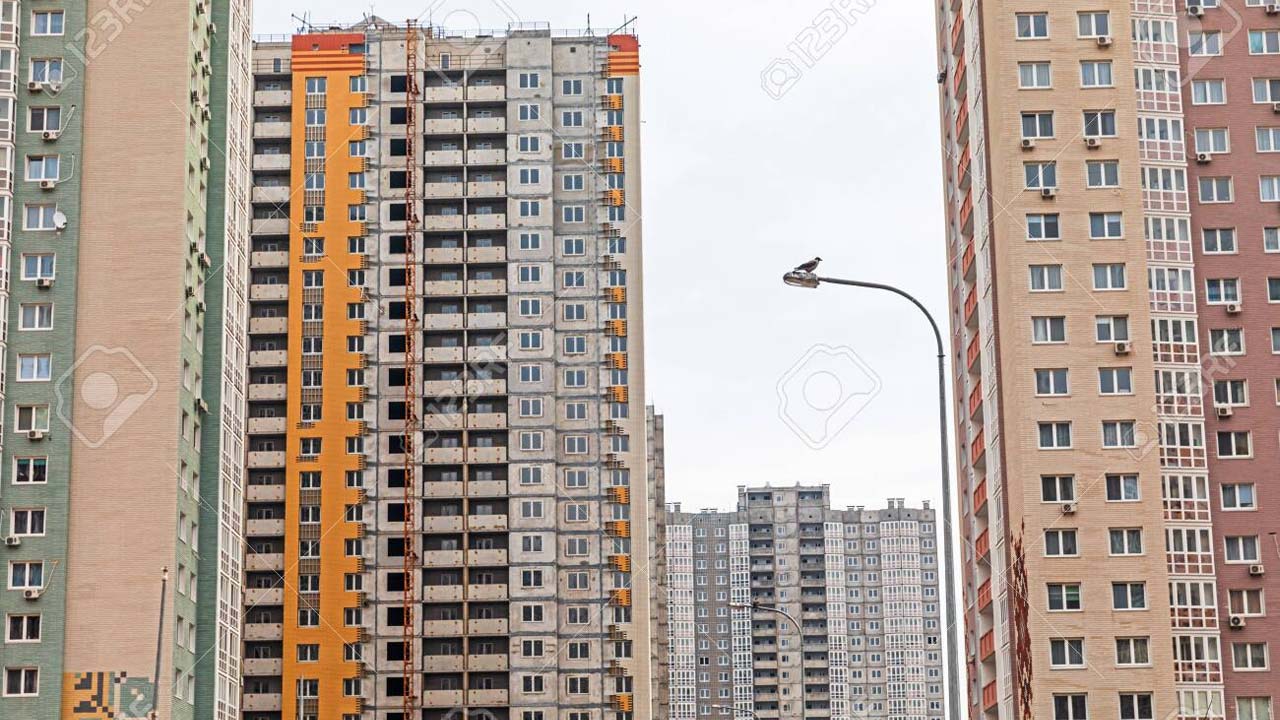
At the same time, one of the goals of the bill is to reduce the risks of unfinished buildings in Ukraine.
I must admit that as the head of the Kyivmiskbud holding, which came to the rescue of investors of 20 problematic objects of the Ukrbud corporation, I have been waiting for the appropriate changes for a long time.
After all, if a similar situation occurs again, there may be no one to lend a hand, and people will have to wait for years for the promised apartments. So what solutions do the people’s deputies offer?
The future apartment is also real estate
The bill proposes to introduce the concepts of “future real estate” and “object of unfinished construction”, which will be the same objects of civil rights as already built housing.
They can be assets of investment funds, can be transferred as a mortgage. But the main thing is that such objects will be entered into the State Register of Rights to Real Estate without fail.
And the house itself must receive an identifier in the Unified State Electronic System in the field of construction.
According to the deputies’ plan, this will immediately cut off unscrupulous developers and outright fraudsters. State registration should be carried out even before the start of preparatory work and will become a mandatory condition for the sale of any apartment or non-residential premises.
But at the same time, it is possible only with a valid building permit. That is, this will eliminate the situation when the developer sells apartments, and the permitting documentation is still in the process of being drawn up or is absent in principle.
If the permit or urban planning conditions are canceled, construction work is stopped, the developer will also not be able to sell a single apartment until all problematic issues are resolved.
In addition, the authors of the bill believe that this form contributes to the openness of data.
In the register, everyone will be able to see how many apartments have been sold and estimate how much money has already been raised for the construction of the house, which will make it impossible to sell the same apartment twice.
Notary is the head of everything
But how do we know that all these requirements and prohibitions will actually be observed?
The authors of the bill found a simple answer – purchase and sale agreements and notaries. According to their idea, transactions in the primary real estate market should be concluded precisely through such agreements, and they must be notarized.
At the same time, after payment, the buyer receives the right of ownership, just before commissioning, it will be the right to the future real estate object.
Any further changes in ownership, mortgage agreements – again state registration and a notary. And the latter checks the land use right, urban planning conditions, and building permits each time.
I cannot help but note here that while everyone, if the bill is adopted, will wait for such changes only in 2022, Kyivmiskbud itself has long chosen just such a mechanism for itself – notarized conclusion of preliminary purchase and sale agreements.
That is why we know better than anyone else that no notary will formalize the purchase of an apartment in a building where there may be at least some problems with the documentation.
More openness
Another innovation proposed by the bill is to maximize the amount of information that the developer is obliged to provide to the investor.
We are talking about both obvious things – permitted construction documentation, data on project participants – and more “closed” issues. For example, about the financial statements of the construction customer for the last two years.
Moreover, among other things, the customer will be obliged to post on its website information about the beneficiary, a monthly report on the progress of construction (today some developers do this), information about sold and unsold areas, the cost of a square meter (not all of them are openly showing it yet).
Of course, this begs the question of why the customer, who may have a very indirect relationship to the sales and construction process itself, but in general the meaning of the idea is clear.
What about unfinished buildings?
I have listed only the key proposals, the full list will be much wider. But after a thorough study of it, the question arises – how will this help solve the problem of unfinished construction?
In fact, most of the innovations of the bill serve only one purpose – to prevent the start of any initially problematic construction project.
But we all know very well that problems can arise even among completely conscientious developers.
And the reason for the stop can be both a global crisis, and a banal lack of finances in a particular company, and protracted legal proceedings. What to do in such cases? Unfortunately, the bill does not give a complete answer.
For example, a fairly correct step is proposed – insurance of the civil liability of the construction customer. But, firstly, it is not mandatory, and secondly, it only applies to disruption of the terms of commissioning an already completed building.
Further, the bill obliges to create the so-called “guarantee part” of real estate. With insurance, it will be 10% of the area, without insurance, 13%.
This part can be sold before commissioning, and its construction can only be financed with the developer’s own or borrowed funds.
It is this part, as well as other unsold areas, that will become a safety cushion in the event of a possible stoppage of construction due to lack of money. However, whether this will always be enough for completion is a rhetorical question.
Not to mention whether anyone will buy real estate in a potential unfinished state at all. And if there is not enough money for completion, the investors themselves will have to blow their noses, as usual.
I will give an example based on a hypothetical project by Ukrbud. Let’s say that Kyivmiskbud received a building from it at a 65% readiness stage. At the same time, 95% of the area has been sold. Add 13% of the warranty part, and we will get 18% of the area for sale.
Is it possible to build 35% of a house for 18% of the potential proceeds? Only if you put up about 100% margin, but at that price, of course, no one will buy an apartment.
By the way, that is why we agreed to accept Ukrbud’s facilities only comprehensively: it also has such “minus” residential complexes that will have to be completed at the expense of profits after the completion of facilities with a positive balance.
Theoretically, the bill offers investors of unfinished buildings another way – to sell the entire building at auction and thus return their money.
Here again, the question of the correspondence of investments and the money received arises, but there is a more serious problem. This can be done only after the start of rehabilitation and the recognition of the construction customer as bankrupt.
Not the developer, but the customer. Who often simply owns the land and in most cases, further paperwork does not interfere with the process.
Let’s return to the example of Ukrbud again. The customers of the construction of all its facilities we took are completely healthy and do not experience any problems.
And the possibility of recognition as bankrupt, for example, the Ministry of Defense or the Ministry of Internal Affairs, looks like a bad joke.
That is, without Kyivmiskbud, even with the new law, investors in such a situation would be forced to continue waiting for their apartments without any prospects.
What will become more difficult
The saddest thing is that some of the proposals, on the contrary, threaten to worsen the situation and carry the risk of incomplete construction due to trifles.
First of all, this is the need to coordinate design changes with buyers.
It is important to note here that any changes to the project are made for a reason, during the construction process, some “pitfalls” often appear – more complex geology or some shortcomings of the designer. Changes to the project are often designed to solve these problems.
And now we bend our fingers. Changing the layout and area of housing or common areas, number of floors, the purpose of technical and auxiliary premises – all these and some other issues must be coordinated with investors.
If you have ever tried to achieve a unanimous decision from a disparate group of people, then you have an idea of how small the chances of success are.
If there is at least one who, for some reason, is categorically against it, in some cases all that remains is to sue in attempts to terminate the contract with him.
Meanwhile, this jeopardizes the entire future prospects for completing construction, disrupts deadlines, etc.
Is everything really that bad?
Of course not. It should be borne in mind that this is only the first draft of the bill and it is obvious that it will have to go through many amendments and comments before being put to the vote.
In addition, it should not be ruled out that the issue of unfinished buildings may be regulated in more detail by other bills. The main thing is that all these initiatives are clearly coordinated with each other in the end.
One way or another, the fact that the issue of unfinished buildings is gradually moving away from its place already inspires some hope.
Yes, at the start everything will definitely not be perfect, but the main thing is to start, to finally move from long years of chatter to real steps. And yes, we will also have to wait a long time for this start: most of the provisions of the bill on investor protection, after possible adoption, will only come into effect in 2022.
So until then, in order not to run into unfinished buildings, I recommend adhering to the traditional rules: trust only proven and reliable developers with experience and reputation.
Ihor Kushnir, Chairman of the Board – President of HC “Kyivmiskbud”
