

A Unified State Register of Shelters is planned in Ukraine
It will be designed to help systematize data on the status of each shelter across the country. It is known that the official state database of shelters will differ from similar databases that currently exist in the information space, since its filling and verification, as well as administration requirements, will be clearly regulated. The system is planned to be integrated into the mobile application “Diya”.
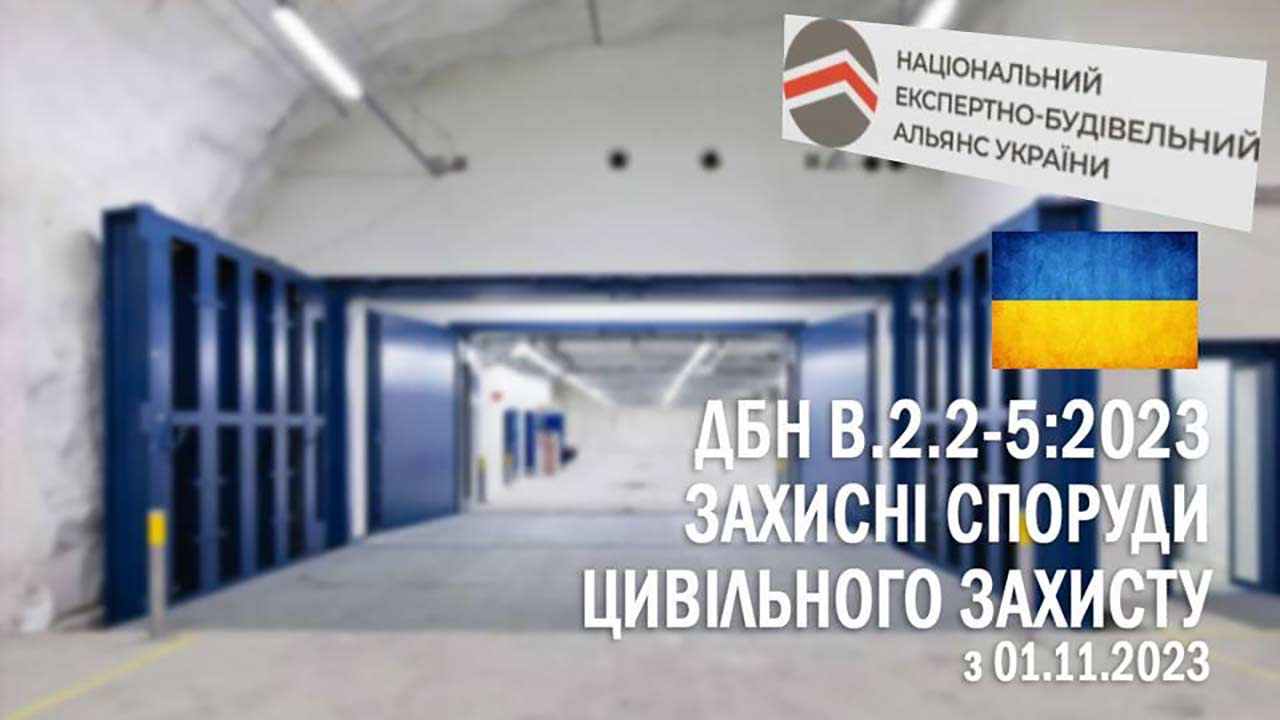
The updated state building codes (DBN) “Protective structures of civil defense”, which came into force on November 1 last year, contain very strict requirements for bomb shelters, which may become a barrier to the implementation of projects in Ukraine due to their excessive cost increase. This is stated by Pavlo Novak, sector engineer of the regional development department of the projects department of the European Investment Bank.
He emphasizes that “in some projects, bomb shelters cost more than the school, service center, or kindergarten itself. Bomb shelters are needed, they need to be built, but they should not become a barrier in the implementation process, the process of project documentation, development, and expert examination. The bank hopes for negotiations with the Ministry of Community, Territorial and Infrastructure Development to find optimal ways to solve this problem.”
Certain changes may be made to the DBN regarding civil defense structures subject to constructive proposals from the specialized environment and the market. These include the length and height of evacuation exits, the capacity of the water tank, requirements for the arrangement of a universal sanitary and hygienic room, etc. This was stated by Olena Shulyak, the head of the Verkhovna Rada Committee on the Organization of State Power, Local Self-Government, Regional Development and Urban Planning.
She emphasizes that “currently, the developers of the DBN receive many requests to adjust these norms. In particular, regarding the use of lighter structures and the possibility of not placing objects underground.”
To assess the effectiveness of the new DBN, you need to live with them, test them. Design, build and look at the results – only then will it be possible to assess how much more comfortable the shelters have become and whether the new rules “work” in practice. This is what the CEO of the urban bureau Big City Lab, Viktoria Tytova, believes.
She notes that “you can build the most beautiful school in the world, but without a safe shelter it will not be put into operation. Yes, now we need to come to terms: the safety of children costs so much.”
The media writes a lot about shelters. I especially like it when they write about how individual objects are becoming many times more expensive, saying why were they cheaper a year ago, and now they cost such exorbitant amounts? The answer is simple – you just need to read the new DBN more carefully and realize that the new criteria for building shelters are radically different from those they were before. This is emphasized by Viktor Leshchynsky, president of the National Expert Construction Alliance of Ukraine.
He explains that “if the facilities were not started by November last year, then they must be redesigned taking into account the new DBN. And since Ukraine will objectively have to focus on underground, much more modern, more secure and much more versatile facilities (PRU, bomb shelters, dual-purpose facilities, such as schools or kindergartens underground), then security in this case becomes much more expensive.
If under the old standards, some similar objects cost 60-70 million hryvnias, then according to the new DBN, the cost now reaches 300 million. This will have to be taken into account. Therefore, all these waves of criticism or some manipulations on the topic of tenders and “sky-high prices” are simply either from banal ignorance, or are attempts to destabilize the situation in a warring country.”
